
Puppies Behind Bars
Winning Hearts and Changing Minds
By Tara Kelly
Photographs by Ashley Gilbertson and Ava Pellow for @Puppies Behind Bars
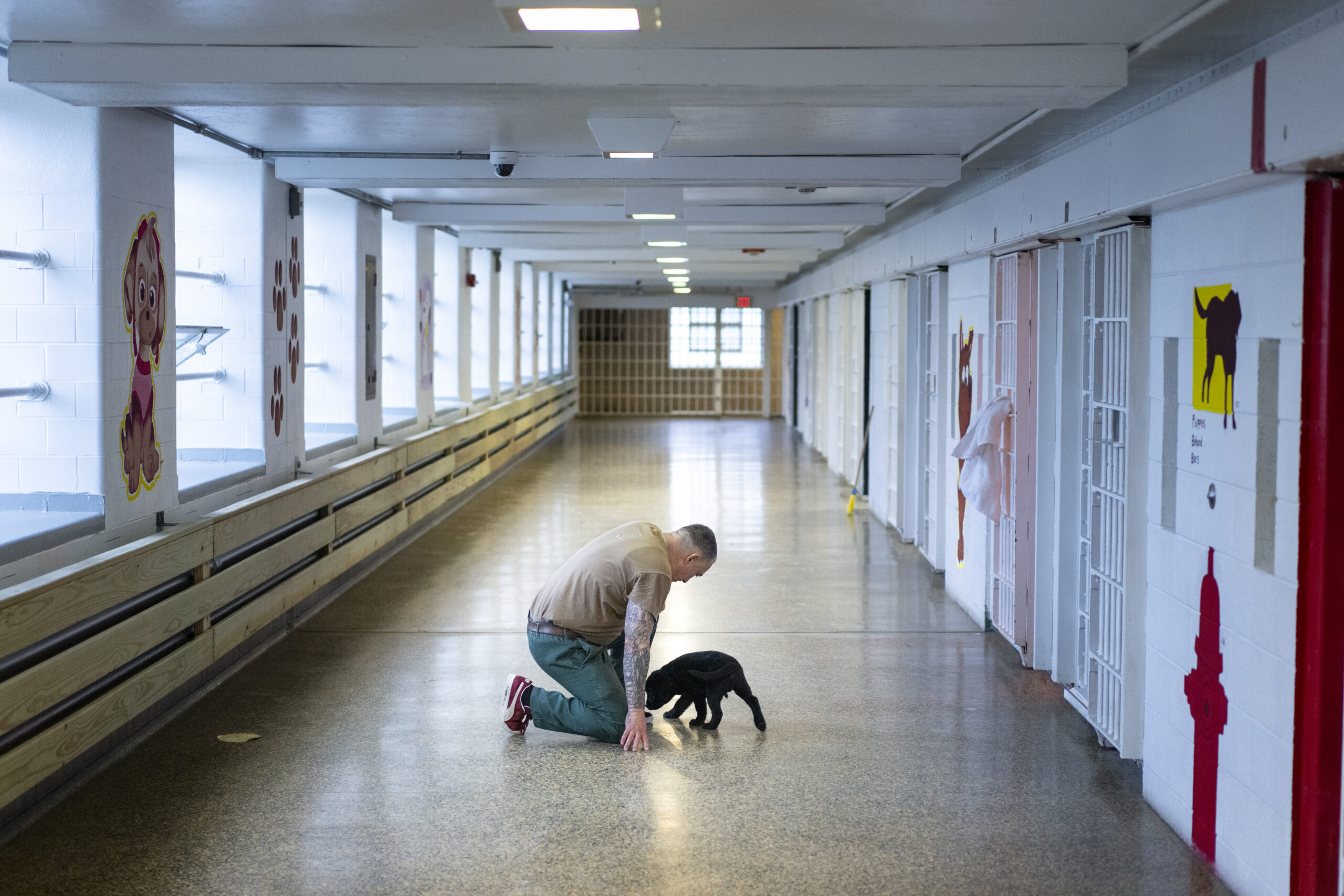
At Green Haven Correctional Facility, a maximum-security prison in southern Dutchess County, men serving long prison sentences with little to no chance of parole are transforming their lives and those around them with the help of Labrador retriever puppies.
Puppies Behind Bars (PBB) is the inspired idea—and life’s work—of Gloria Gilbert Stoga, who founded the organization in 1997. The concept is simple: Teach incarcerated individuals to train puppies to be service dogs. PBB offers a way for the incarcerated to find and give hope.
One of the biggest champions of PBB is Green Haven Superintendent Mark Miller. “Puppies Behind Bars is the only true program where the department and the incarcerated individuals can pay it back to society, our service men and women, and our partners in law enforcement. I was told that Green Haven staff would not accept it, but I was determined to change that narrative,” says Miller.
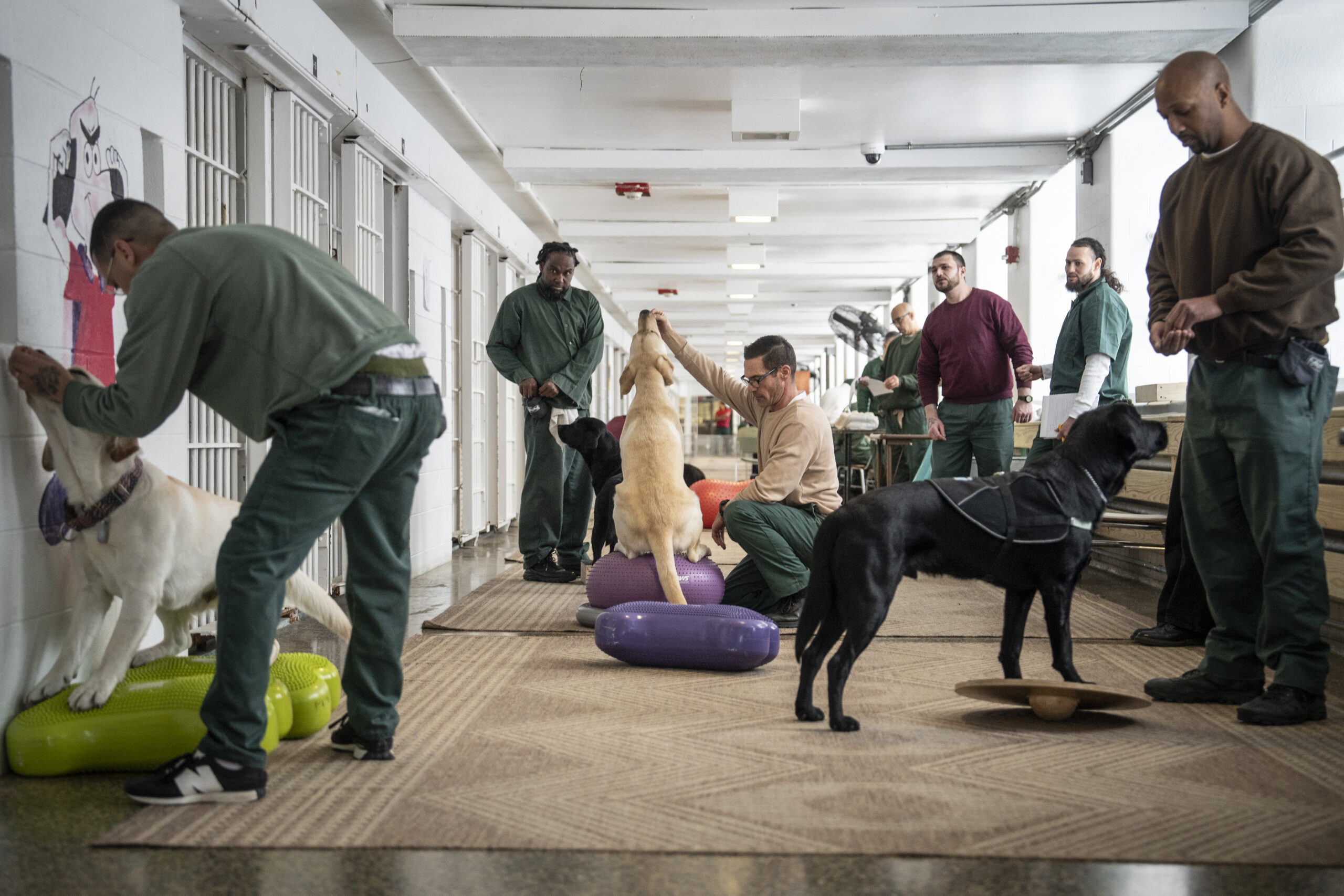
An incarcerated individual must meet stringent criteria to be accepted into the program as a puppy raiser. Then they spend a year learning the ropes before they are given their own puppy to raise and train.
The men live in a dedicated gallery at the correctional facility, sharing their cell with their puppy and a very large dog crate. It is a two-year, 24/7 commitment. They have easy access to outdoor space (accompanied by a prison guard) but the only time off for good behavior goes to the dogs, who, with the help of a cadre of volunteers, spend time being socialized in the outside world.
Just as important as the people who train and raise the puppies are the people who receive them into their lives, and the jobs the dogs will go on to do. Initially, Stoga was focused on training guide dogs for the seeing impaired, but over time the program has evolved to meet the needs of the moment.
“After 9/11 we added explosive detection canines. In 2006, with the ongoing wars in Afghanistan and Iraq, we started training dogs for wounded vets, with both physical handicaps and PTSD,” Stoga says. “We’re still serving veterans; but then the Sandy Hook shootings became the catalyst for helping first responders here at home.”
The focus now is training service dogs specifically for police officers and EMTs who’ve suffered trauma, and facility dogs to help bridge the divide between the police and the communities they serve. Two weeks before the dogs are released to their new homes, the recipients come to Green Haven to work with the dogs and their puppy raisers.
At a graduation ceremony held in May in the Green Haven visiting room, Superintendent Miller, Stoga, PBB staff, and all the volunteers came together to celebrate the hand-off from puppy raisers to the new handlers. They each spoke about their experience.
Mike, one of the incarcerated puppy raisers, talked about partnership, describing a life in which his constant partner was drug addiction. “This is the first and only partnership in my life that has had a positive effect. PBB makes me feel good about myself.”
Jamel, a police officer whose dog, Patti, will become part of the Community Resource Unit in Wilmington, Delaware, said, “Inside Green Haven I saw hope and compassion.” He told the puppy raisers, “Your work is meaningful and powerful.”
Brandi, a retired first responder, and federal disaster medic, spoke about a life shaped by pain and trauma. She gave credit to her dog’s puppy raiser. “Bailey is not just a service dog. She’s a healer. Surviving isn’t the same as healing. What I didn’t expect was hope; offering peace where there used to be chaos.” —puppiesbehindbars.com