
Healing Nature
Elk Ravine Farm Restores Places and People
By Christopher Stella
Photographs by Rana Faure
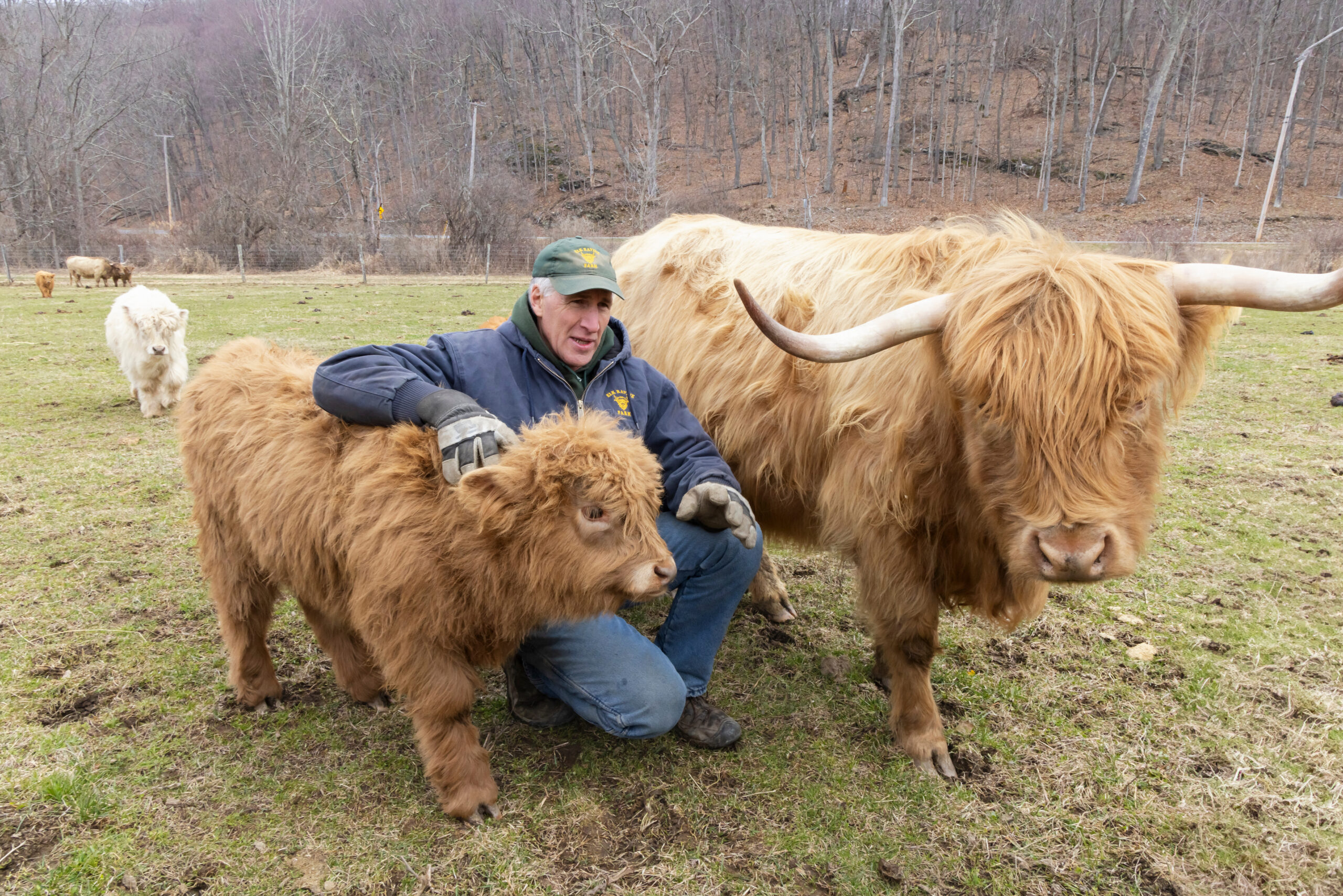
Animals are just like people,” says Jim Archer, farmer, ecological restoration contractor, and owner of Elk Ravine Farm. “If you’re dedicated to them when they’re young, it’ll show later.” Archer’s dedication to animals is on full display at Elk Ravine Farm in Amenia—and its well-adjusted livestock are gaining worldwide attention.
Elk Ravine’s story started with a simple love of animals. Archer grew up in Katonah, keeping pigeons, ducks, and chickens as pets. His parents told him that if he wanted larger animals, he’d have to have land to accommodate them. So, after establishing a contracting business, Archer purchased ten acres in LaGrange in 1989, acquiring livestock to fill the fields. He outgrew the acreage and purchased the 90-acre property where Elk Ravine now stands in 1995. Elk Ravine has built a reputation for its Scottish Highland Cattle, but it’s home to more than 100 animals, including water buffalo from Southeast Asia, Belgian draft horses, Tibetan yaks, miniature donkeys, pygmy goats, Kune Kune pigs, emus, mandarin ducks, peacocks, and exotic pheasants. Atypical as this seems, it’s because Elk Ravine isn’t a conventional farm. It doesn’t produce agricultural products or raise animals for meat —instead, the livestock are employed in preserving local wetlands.


“Development has fractured wetlands, driving out larger herbivore species that once maintained ecological balance,” says Archer. “When the natural grazers disappeared, invasive species took over, trees sprung up, and the ecology changed.” By introducing new herbivores to consume overgrowth—cattle, for example—wetlands and their inhabitants can flourish again. The impact has been significant: birds and pollinators return, native plant life regrows, and endangered species such as the local bog turtle rebound. Animals aren’t the only beneficiaries—much of New York City’s water supply comes from upstate, making wetland preservation essential to its function.
Archer educates the public on these initiatives through two-hour guided tours. “Guests come to pet a fluffy cow, but then get an education on the environment, animal husbandry, and how animals should be taken care of,” he says. “The hands-on experience is critical—once a person touches an animal, they open up and absorb new experiences and information.” Information about Elk Ravine is spreading rapidly worldwide through social media. Its Instagram and TikTok accounts now boast hundreds of thousands of followers and millions of views. One video of Archer bathing a baby Scottish Highland calf in a sink to save it from hypothermia amassed more than 1.2 million views on TikTok—the calf is aptly named Frosty. “We’ve had people who found us on Instagram visit from as far as Luxembourg,” says Archer. For Archer, Elk Ravine represents more than a lifelong dream—it’s an opportunity to heal landscapes and people. “Nature can help people with anything they’re dealing with,” he says. “They just need to recognize the beauty of what’s around them and realize they’re a part of it.”
—elkravinefarm.com


