
Where River Meets Rail
By Alexandra Mazza
Photo Credit: Hudson River Maritime Museum
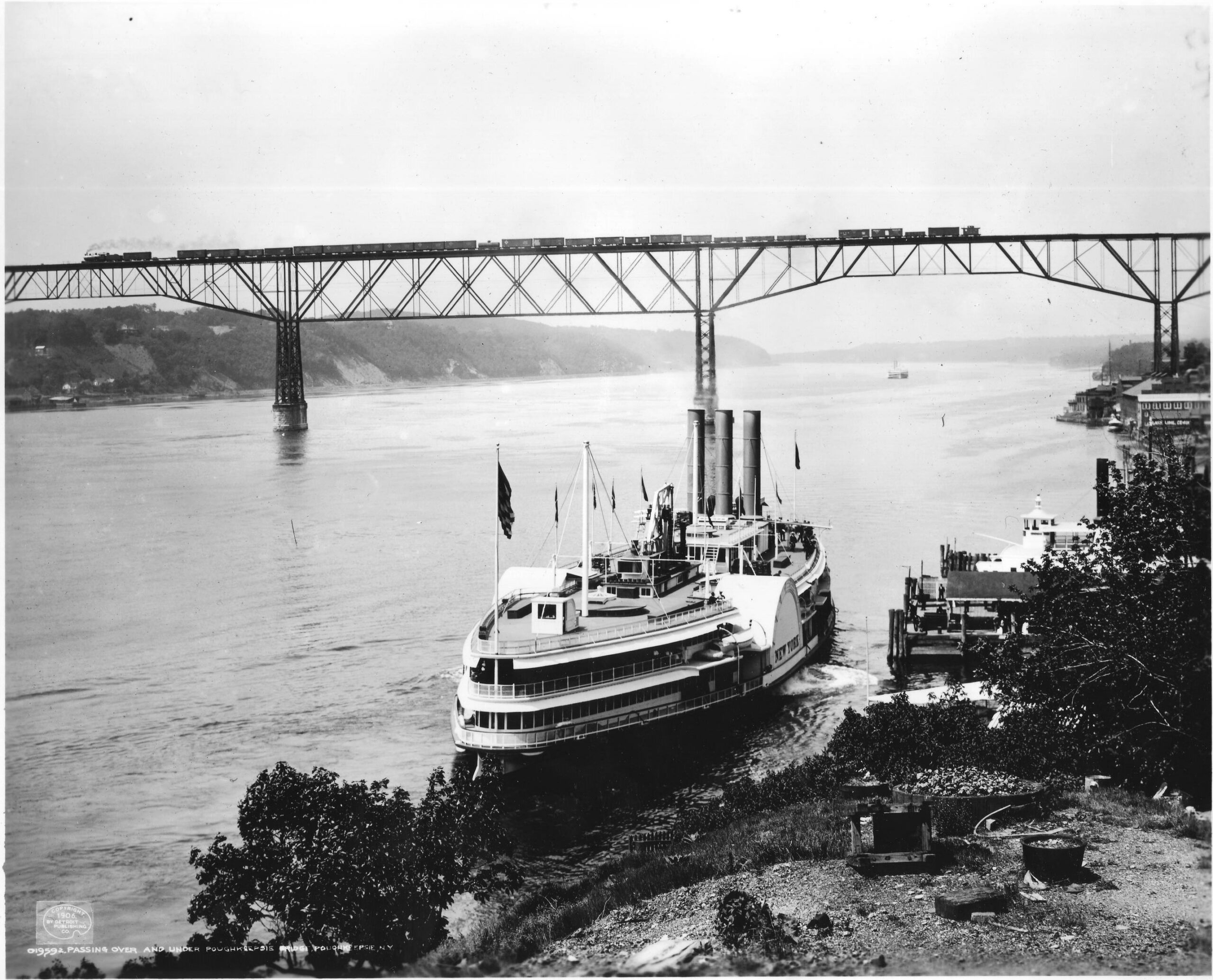
Long before the Walkway Over the Hudson drew visitors to Poughkeepsie for its views, the Hudson River was one of the city’s most important avenues for transportation, commerce, and connection. In the 19th century, the waterfront was a working gateway to the city, with steamboats, ferries, ships, docks, warehouses, and landings linking Poughkeepsie to communities along the Hudson and to markets farther afield.
The Upper Landing, near the mouth of the Fall Kill, was an early center of waterfront activity. By the 19th century, steamboat service had become an important part of travel, while vessels also carried goods to and from Poughkeepsie. The Main Street landing later became the city’s principal steamboat landing, serving both passengers and commerce. Deep water close to shore allowed the waterfront to accommodate large vessels, including the Hudson River Dayliners that stopped there in the early 20th century. Railroad development only strengthened Poughkeepsie’s position. When the Hudson River Railroad reached the city in 1850, its depot stood just a block from the steamboat terminal. The completion of the Poughkeepsie Railroad Bridge in 1889 created a major connection for passenger and freight rail traffic across the Hudson.
It was for good reason that Poughkeepsie earned the 19th-century nickname “Queen City on the Hudson.” Its location, industries, and hardworking population helped make it a regional center of commerce. Today, the waterfront serves a very different purpose. Yet the Walkway occupies the path of a bridge built during an era when river and rail made Poughkeepsie a vital crossroads. ––hrmm.org